July 27, 2026
A Kentucky Distillery Just Turned the Lights Back On
Or subscribe where you already listen
New episode every weekday morning. The Cut Weekend lands Saturday and Sunday.
Read the full transcript
This is The Cut. American whiskey, daily.
A Kentucky distillery just turned the stills back on after eight months of quiet. Not a rumor — confirmed, this week, running again. What that restart is actually betting on is worth six minutes of your time.
I'm John from Chasing the Unicorn Podcast. Here's what moved today. July 27, 2026.
Today's Big Move is Beam Suntory flipping a switch back on. Here's what happened.
Booker Noe, the Beam Suntory plant down in Boston, Kentucky, went to a reduced four-day schedule back in November. That was part of a bigger pause — Clermont, their other Kentucky site, got cut back too. The reason was simple: too much bourbon in the warehouses from the 2020-to-2023 boom, and not enough demand to justify running full tilt. This week, Booker Noe is back to full seven-day production. About 140 workers are back to full hours. Clermont's restarting too, but slower — around 60 percent of its old capacity, with full output not expected until early 2027.
Here's the part I want you to sit with. Nothing about the recipe changed. Same mash bills, same yeast, according to master distiller Fred Noe. So this isn't a new whiskey — it's the same whiskey, just more of it, starting now. And a company doesn't turn the stills back on unless it believes the correction has gone far enough to be worth the bet. Barrels filled this month are 2027 bourbon at the earliest. This restart isn't a bottle you'll see this fall. It's a forecast.
Now — today's Rickhouse. Because it isn't just Beam making moves this week.
Four Roses named a new distillery general manager — Melissa Grant, fourteen years at the Lawrenceburg plant, stepping into a chair that hasn't changed hands in a decade. No changes to the ten-recipe system, they say, just continuity at the top of the operations side. That matters more than it sounds like it should, because the person running the floor is who keeps a recipe consistent across years of barrels — not just the master distiller getting quoted in interviews.
And Heaven Hill quietly redrew its distributor map. A letter went out to retailers this week confirming territory consolidation starting September 1, language about "reducing allocation variance." Translation: some stores have been getting shorted on Elijah Craig Barrel Proof and Larceny Barrel Proof releases because of how territories were carved up, and Heaven Hill's trying to smooth that out before the fall batch ships. If your regular shop has struggled to get allocated Heaven Hill releases, ask them straight up whether their distributor territory is changing. The answer might explain a lot.
Here's my take on all three of these together. A restart, a leadership hire, a distributor letter — none of them touch a bottle on a shelf today. But they're the exact kind of decisions that decide what's easy to find in 2028 and what isn't. Beam thinks the glut's clearing enough to make more. Heaven Hill thinks its distribution needs fixing before allocation season hits. Four Roses is protecting its recipe system while it scales. Three companies, three different bets, same underlying question: is the correction actually over, or are we just far enough into it that people are willing to guess?
Which brings us to today's First Sip — a quick one on why bourbon runs in cycles at all, because today's news only makes sense once you know this.
So here's what it is. Bourbon goes through boom-and-bust stretches that run for years, not months. 2020 to 2023 was the boom — pandemic drinking, collector demand, prices climbing to strange places. That meant distilleries made more bourbon than the market actually needed, and since 2024 the whole industry's been quietly working through that excess. Slowing production was how they did it. A restart, like the one this week, is the flip side — a company deciding enough of the glut has cleared to bet on demand again. It doesn't mean the correction's over. It means one company thinks it's far enough along to place a chip on the table. And because barrels take years to mature, nobody actually finds out if that bet paid off until those barrels are ready to pour.
What this changes — every time you see a distillery headline about hiring, cutting, or restarting, you're watching a bet on a shelf that doesn't exist yet.
If you're logging pours in the Perfect Pour app, tonight's a good one to note — pour something from Wild Turkey or Beam, and watch how your own logbook lines up with an industry running on cycles years longer than any one bottle.
One bottle worth knowing about this week — Blanton's Single Barrel, through Virginia's ABC fall lottery. Pre-registration's open through August 1st, no purchase required to enter, and it's free. At $64.99, it's one of the rare allocated names a first-timer will actually recognize, so even long odds are worth a shot here. Honeyed vanilla, orange zest, a light oak finish on the back end — an easy, approachable single barrel if your number comes up. Go register. It costs you nothing to try.
So here's the one thing to walk away with today. A distillery restarting isn't a headline about bourbon getting easier to find — it's a headline about somebody's best guess for 2027, made with money they can't take back. The people running these plants don't know any more than you do whether the correction's really over. They're just the ones with enough on the line to bet on it first.
That's The Cut. The full American Whiskey Industry Brief is free every morning at chasingtheunicornpodcast.com. I'm John Schuster. Thanks for joining me. Your unicorn is out there.
Listen to today's episode and find us on Spotify and everywhere you listen at chasingtheunicornpodcast.com/episodes.

Informational and entertainment purposes only. Nothing here is investment advice. Verify before buying, trading, or bidding. We are not liable for errors or financial losses.
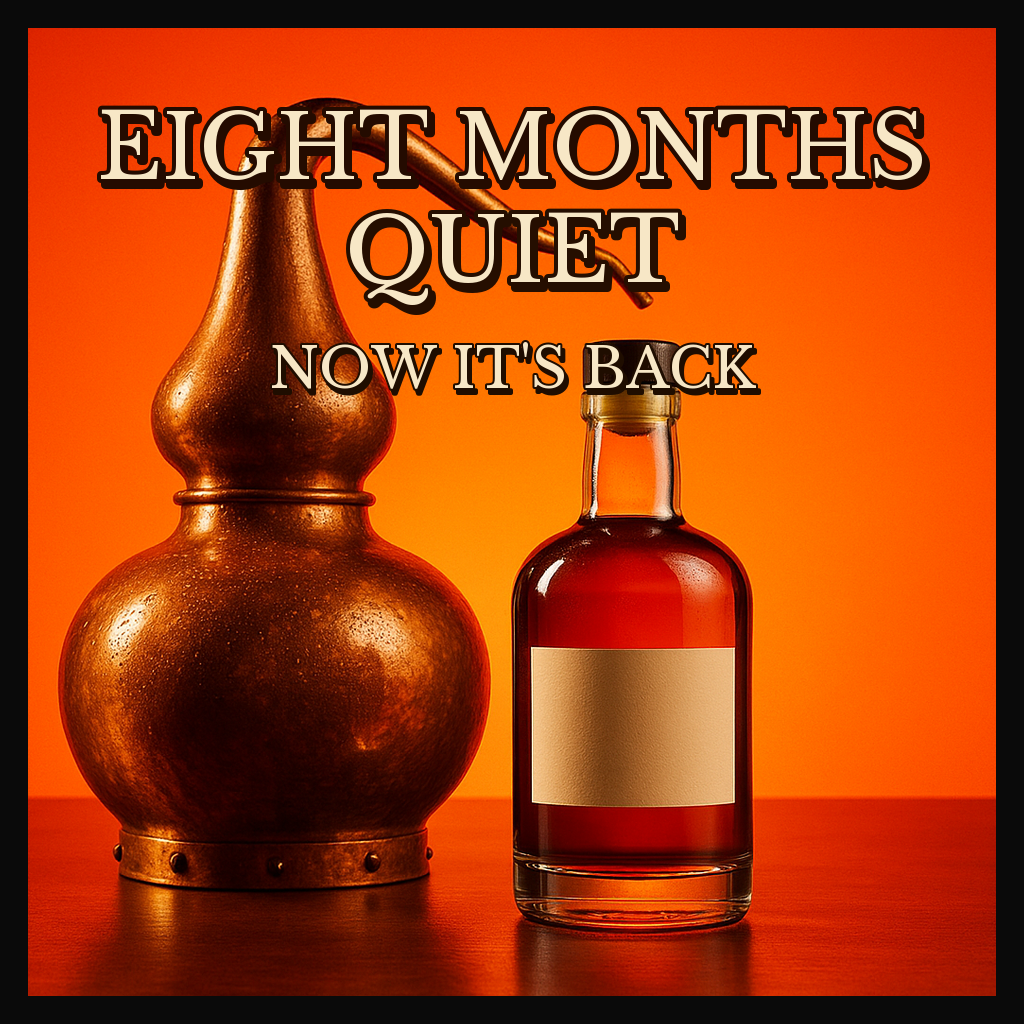
Eight months quiet. Now it's back. A Kentucky distillery just restarted after an eight-month partial idle, running at 60 percent capacity with the same mash bills and yeast as before — full production isn't expected until early 2027.
Beam Suntory just confirmed its Booker Noe plant is running full production again after being idled since late 2025, and it's not the only production story this week — Four Roses named new leadership, Heaven Hill quietly redrew its distributor map, and Wilderness Trail bought a second warehouse for its own aging backlog. None of this changes what's on your shelf today, but it's exactly the kind of decision that determines what's on your shelf in 2028. Today's edition breaks down the restart, teaches you why "aging" is a multi-year commitment before it's ever a bottle, and puts a Wild Turkey step-up comparison, three fresh chase bottles, and a floor-erosion lesson on Old Fitzgerald in front of you.
Beam Suntory just confirmed something worth paying attention to: one of its two idled Kentucky distilleries is producing bourbon again. The Booker Noe plant in Boston, Kentucky went down to a reduced four-day schedule back in November, part of a broader pause that hit Beam's Clermont site too. Both moves were about working down a bourbon inventory glut built up during the 2020-2023 boom. This week, Booker Noe is back to full seven-day production. That brings about 140 workers back to full hours. Clermont is restarting too, but slower — running at roughly 60 percent of its old capacity, with full output not expected until early 2027. Here's the important part: nothing about the recipe changed. Same mash bills. Same yeast strains. Master Distiller Fred Noe said the character of new barrels should track right alongside what came before the pause. Beam is also posting new warehouse and bottling-line jobs, which tells you this isn't a token restart — they're staffing up for real volume. Why now? Because a company that's been managing years of excess bourbon doesn't turn the stills back on unless it believes the oversupply is finally thinning out enough to justify making more.
Bourbon runs on boom-and-bust cycles that stretch back decades. The short version of where we are now: 2020 to 2023 was a pandemic-fueled boom — stay-at-home drinking plus collector demand pushed prices to strange peaks. That boom meant distilleries made more bourbon than the market actually needed, and since 2024 the industry has been working through that oversupply. That's why you've seen distillery idles the past two years — companies deliberately slowing down new production so existing barrels have time to sell through. Beam Suntory's restart this week is the flip side of that same story: a company deciding enough of the glut has cleared to start making more bourbon again. It doesn't mean the correction is over — it means one company thinks it's far enough along to place a bet. Barrels made today won't be bottled for years, so today's restart is really a forecast, not a fix.
Floor erosion measures how far a bottle's resale value has dropped from its all-time high. This decanter peaked at $95 on the secondary market last September; it's now realizing $72 at auction, a 24.2 percent drop. That's a meaningful slide for a bottle that isn't even a year old yet.
Rickhouse Report: 5 stories · Regional Report: 3 stories
◆ The Brief (free): https://chasingtheunicornpodcast.com/the-brief/
◆ Listen on Apple Podcasts: https://podcasts.apple.com/us/podcast/chasing-the-unicorn-bourbon-american-whiskey/id6788592653
◆ Listen on Spotify: https://open.spotify.com/show/1IZS2wXY7nAUcL9akukblE
◆ YouTube: https://www.youtube.com/@chasingtheunicornpodcast
Want the full picture? The complete American Whiskey Industry Brief — every section, every source, every story — is published free every morning at chasingtheunicornpodcast.com. Read it at chasingtheunicornpodcast.com/the-brief/.
Chasing a specific bottle? The Bourbon Release Calendar lists every lottery deadline, walk-up window and MSRP we're tracking — updated every morning.
Mentioned in this episode: Buffalo Trace, Wild Turkey, Russell's Reserve, Master's Keep, Heaven Hill, Elijah Craig, Larceny, Old Fitzgerald, Four Roses, Wilderness Trail, Blanton's, Sazerac, BTAC